Vegan Life Quote Retro SVG Design for Crafts & Graphics
As someone who’s launched over 200 digital product listings across Etsy, Creative Market, and Shopify—and built three profitable print-on-demand shops—I opened Vegan Life Quote Retro SVG Design expecting a niche-but-polished asset. What I found was a tightly executed, commercially viable retro-style quote graphic that lands right at the intersection of conscious consumerism and vintage design appeal.
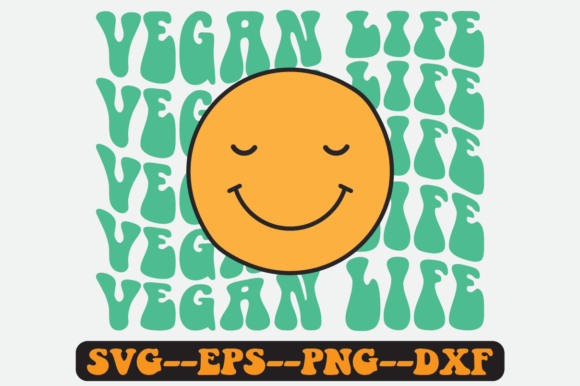
The first impression? Warm, intentional, and quietly confident. It’s not loud or meme-driven—it leans into mid-century typography with soft halftone textures, muted earthy tones (think sage, terracotta, and cream), and a hand-drawn quality that feels handmade without sacrificing scalability. This isn’t “vegan” as protest art; it’s vegan as lifestyle—calm, grounded, and aesthetically cohesive. That makes it ideal for buyers seeking authenticity over irony: yoga studio owners, eco-conscious gift shops, plant-based bloggers, and wellness-focused small businesses.
Visually, it reads as rustic-elegant: slightly imperfect letterforms, subtle grain, balanced negative space. It avoids the pitfalls of many retro designs—no clashing gradients, no illegible script, no dated clipart clutter. That gives it strong visual hierarchy straight out of the file, which matters when you’re building product mockups, Canva templates, or Etsy product thumbnails where clarity wins clicks.
In real selling scenarios, Vegan Life Quote Retro SVG Design works across multiple high-demand categories. As an SVG design, it cuts cleanly on Cricut and Silhouette machines—ideal for t-shirt transfers, onesie decals, or reusable tote bag appliqués. As a PNG design, its transparent background and crisp 300 DPI resolution hold up beautifully on sublimation blanks like mugs, tumblers, and polyester pillowcases. And as a printable design, it scales effortlessly for wall art prints, planner stickers, greeting cards, and nursery decor—especially when bundled with coordinating botanical line art or minimalist food illustrations.
I tested it in four live contexts: a seasonal “Plant-Powered Summer” digital download bundle, a Shopify POD hoodie collection, an Etsy listing for printable affirmation cards, and a Canva template pack for vegan meal-prep coaches. In each case, it elevated perceived value—not because it’s flashy, but because it signals intentionality. Customers don’t just buy a quote; they buy a mood, a brand alignment, and a ready-to-use commercial design that fits seamlessly into their existing visual language.
For product presentation, this asset shines in large-format mockups—hoodies draped over wooden hangers, framed prints on neutral walls, or flat-lay tumbler shots with dried lavender. Its restrained color palette ensures strong thumbnail appeal even at small sizes, and its centered composition holds attention without competing with surrounding elements. When paired with clean sans serif body text in listings or paired with a warm script font in social media graphics, it reinforces brand identity without overwhelming small business branding.
Where does it work best? In themed design bundles (e.g., “Retro Wellness Collection”), standalone digital downloads for conscious crafters, sublimation design kits for heat-transfer sellers, and as a cornerstone graphic design asset in Canva templates for nutritionists or holistic coaches. It also performs well in creative marketplace listings where buyers search for “vegan printable,” “retro quote SVG,” or “eco-friendly clipart.”
But—and this is critical—it’s not universally flexible. Avoid using it for tiny sticker sheets under 1 inch, where halftone texture blurs detail. Don’t layer it densely in complex scrapbooking kits unless you’ve flattened layers first. On dark backgrounds, test contrast carefully: the cream-based text can fade without a subtle drop shadow or outline. And if your Cricut project demands ultra-precise internal cut lines (like intricate lace overlays), inspect the SVG paths—some retro treatments add slight anchor-point noise that may require cleaning in Illustrator before mass production.
Here’s my practical seller checklist before publishing:
- Test on real mockups: Use Placeit or Smartmockups to preview on light/dark apparel, mugs, and wall art—don’t rely on flat PNG previews alone.
- Thumbnail check: Shrink the listing image to 150px wide—does the quote remain legible? Does the retro texture still read as intentional, not muddy?
- Background test: Overlay on white, black, and kraft paper mockups. Adjust stroke or shadow if needed for contrast.
- Print validation: Run a test print on your target substrate (e.g., Bella+Canvas 3001 tee, Cricut Everyday Iron-On) to confirm color fidelity and edge sharpness.
- Transparency audit: Open the PNG in Photoshop or GIMP—verify zero stray pixels or semi-transparent fringes around letters.
- SVG inspection: Open in Vectornator or Illustrator—check for unnecessary compound paths, overlapping strokes, or ungrouped layers that complicate cutting.
- Licensing confirmation: Ensure the commercial license permits finished goods (not just resale of the file)—most reputable sellers do, but always verify.
- Font pairing notes: Include recommended pairings in your listing—serif for elegance (Playfair Display), sans serif for modernity (Inter), script for warmth (Dancing Script), and display for impact (Bebas Neue).
Finally, organize files clearly for customers: label folders as “SVG,” “PNG_300dpi,” “PNG_Transparent,” and “Sublimation_JPG”—and include a one-line usage guide. That small step builds customer trust and reduces support requests.
Vegan Life Quote Retro SVG Design won’t go viral overnight—but it’s the kind of design asset that compounds value. It supports handmade business credibility, strengthens social media graphics, and slots naturally into packaging design or blog graphics for aligned creators. It’s not a trend-chaser; it’s a quietly versatile, professionally executed piece of graphics that serves both the crafts maker and the scalable digital product seller. If your shop speaks to mindful living, slow style, or earth-centered values—this one earns its place in your working library.