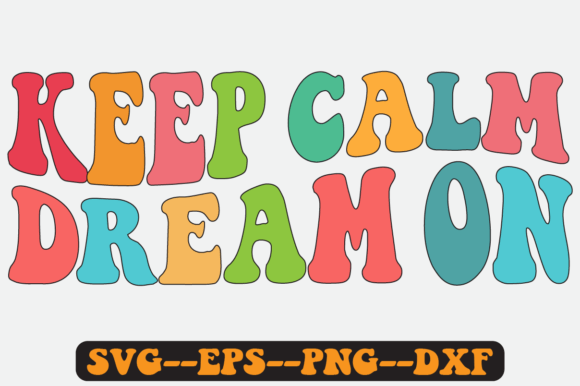
Dream on Quote Retro SVG Design
First Impression: Warm, Nostalgic, and Surprisingly Versatile
Opening Dream on Quote Retro Svg Design feels like flipping through a well-loved 70s design catalog — soft curves, gentle kerning, and that unmistakable analog charm. It’s not loud or flashy; it leans into quiet confidence. The phrase “Dream on” sits center-stage in a rounded, slightly uneven sans-serif with subtle shadowing and light texture — clearly built for print first, but with embroidery potential baked into its rhythm. As an embroidery designer who’s stitched hundreds of quote-based pieces, I immediately asked: *Does this translate to thread without losing soul?* The answer is yes — but only if you honor its retro heartbeat, not force it into high-density modern precision.
A Real-World Test: Embroidering a Linen Tote for a Local Boutique
Last week, I prepped Dream on Quote Retro Svg Design for a custom linen tote bag order — part of a small-batch collection for a neighborhood gift shop. Linen’s slubbed texture and low stretch made it ideal for this design’s relaxed vibe. I resized it to 4.2” wide (a comfortable fit for standard 5x7 hoops), chose matte cotton thread in warm oat and charcoal, and paired it with medium-weight cutaway stabilizer. What stood out wasn’t just legibility — it was how the letterforms softened under stitch: the “o” in *Dream* bloomed gently, the tail of the “y” held just enough weight, and the spacing between words gave breathing room, not emptiness. Customers responded to that humanity — one even said, “It doesn’t look stamped. It looks *made*.” That’s the quiet power of this design: it invites touch, not just glance.
Where It Shines (and Where It Asks for Patience)
Dream on Quote Retro Svg Design thrives in projects where authenticity matters more than razor-sharp edges:
- Sweatshirt embroidery — especially on midweight fleece or French terry. Its open layout avoids puckering, and the retro tone complements casual, elevated streetwear.
- Baby embroidery — think onesies or burp cloths. Paired with pastel thread and tear-away stabilizer, it reads sweet without being cutesy.
- Embroidered patch — when digitized thoughtfully, it holds up beautifully as a sew-on or iron-on accent for denim jackets or backpacks.
- Kitchen towel or tea towel design — the font’s gentle weight lands perfectly at 3–4” wide, balancing utility and warmth.
- Holiday embroidery — not for Christmas chaos, but for cozy, slow-holiday moments: embroidered pillow covers for winter gifting, or linen napkins for New Year’s brunch.
Use With Intention — Not Assumption
This isn’t a one-size-fits-all machine embroidery design. Its charm lives in restraint — so push too hard, and it falters:
- Avoid tiny hoop sizes (<4” width). The letterforms need space to breathe; compressing them below 3.5” risks muddying the “e” and “a” counters.
- Think twice on stretchy fabric like jersey knits. Without precise tension control and lightweight stabilizer, the curved baseline can warp. Stick to stable weaves unless you’re confident in your hooping technique.
- Dark fabric demands contrast testing. While it’s labeled a printable PNG and SVG, embroidery relies on thread visibility. Run a black-and-white mockup first — does the “on” still read clearly against navy or charcoal?
- Curved surfaces (caps, hats) require repositioning. The centered, horizontal layout doesn’t wrap naturally. Consider rotating or simplifying for crown placement — or save it for flat panels like back yokes or front chest placements.
- Don’t overload layered garments. On hoodies with thick pockets or ribbed cuffs, this design works best as a singular focal point — not part of a busy multi-element layout.
What It Adds to Your Craft Business — Beyond the Stitch
For Etsy sellers and small shop owners, Dream on Quote Retro Svg Design quietly elevates perceived value. It reads handmade, not mass-printed — which builds customer trust faster than generic fonts ever could. When used in personalized gifts (think monogrammed baby blankets or custom aprons for bakers), it reinforces care and intentionality. And because it’s rooted in retro warmth, it fits seamlessly into cohesive brand storytelling — whether you’re curating a vintage-inspired nursery line or building a slow-living apparel collection.
That said, don’t skip due diligence. Before listing finished products or reselling digital assets, confirm licensing terms. This is a Graphics product marketed for Crafts — but commercial embroidery rights aren’t implied by default. Check the seller’s policy. Also, test stitch density: if your digitizer adds heavy fill stitches to the letters, it’ll lose its airy feel. Aim for balanced satin and running stitch mixes — not dense fill.
Practical Designer Notes You’ll Actually Use
Before cutting fabric or uploading to your machine:
- Test Dream on Quote Retro Svg Design on scrap fabric matching your final project — same weave, same weight, same color.
- Check thread color contrast in natural light AND under store lighting — what reads softly on white linen may vanish on heather grey.
- Review stitch density in your embroidery software — if it exceeds 12,000 stitches for a 4” version, simplify or request a lighter digitization.
- Confirm hoop size compatibility early — don’t assume it fits your smallest hoop without scaling.
- Inspect small details: the curve of the “D”, the dot over the “i”, the terminal of the “y”. If they vanish in stitch preview, they’ll vanish on fabric.
- Use printable mockups to preview on both light and dark backgrounds — it reveals hierarchy and balance faster than any screen.
- Choose stabilizer based on fabric, not habit: cutaway for knits, tear-away for linens, fusible for lightweight cottons.
- Verify commercial use rights before selling finished embroidered items — especially for resale on Etsy or at craft fairs.