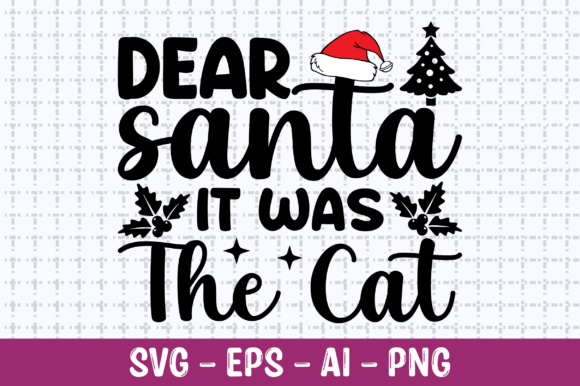
Dear Santa Lets Negotiate SVG Design
A Designer’s Real-World Check Before Stitching
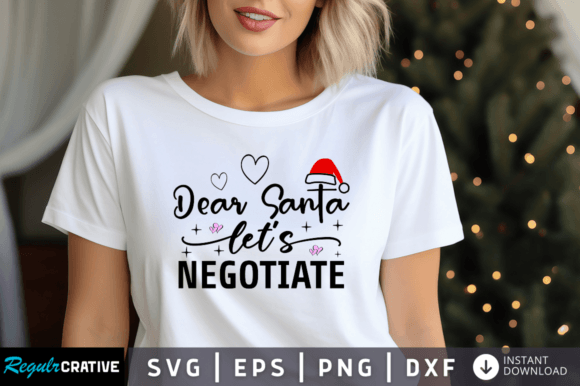
As someone who’s digitized, stitched, and sold hundreds of embroidery designs—especially for holiday collections—I opened Dear Santa Lets Negotiate SVG Design expecting playful charm. What I found was a tightly composed, Boho Christian Christmas motif that lands somewhere between whimsy and warmth. It’s not overly ornate, but it’s not minimalist either—it leans into hand-drawn texture, gentle curves, and intentional spacing. The phrase “Dear Santa, Let’s Negotiate” sits center-stage in a soft, slightly uneven script, flanked by subtle botanical flourishes: eucalyptus sprigs, tiny stars, and a single minimalist cross tucked near the lower corner. That cross isn’t dominant—but it’s present, anchoring the design’s spiritual tone without overshadowing its lighthearted negotiation premise.
This Is the Kind of Design That Lives on a Linen Tea Towel
I tested Dear Santa Lets Negotiate SVG Design as the focal point for a custom holiday kitchen set—specifically, embroidered linen tea towels for a small-batch boutique. Why tea towels? Because they demand clarity at medium scale (roughly 4–5 inches wide), tolerate moderate stitch density, and showcase texture without hiding imperfections. On tightly woven linen with medium-weight cutaway stabilizer, the design stitched cleanly: the script remained legible, the leaves held shape without fraying, and the cross stayed crisp—not lost in fill stitch bleed. Customers responded strongly to the tone: it felt personal, gently irreverent, and authentically handmade—not mass-produced or cliché. That matters. When you’re selling a $32 embroidered towel on Etsy or at a local craft fair, emotional resonance is half the sale.
Where It Shines—and Where It Needs Caution
Dear Santa Lets Negotiate SVG Design works beautifully on stable, medium-weight fabrics: cotton canvas tote bags, fleece-lined sweatshirts, denim aprons, and cotton-blend pillow covers. Its balanced negative space prevents overcrowding, and its modest height (likely under 4.5 inches tall) fits comfortably in standard 5×7 hoops—ideal for small shop owners stitching in batches. As a machine embroidery design, it avoids overloading with dense satin stitch borders or micro-details that vanish on textured surfaces.
But here’s where attention matters:
- Thin or stretchy fabric? Skip it on lightweight jersey tees unless you use tear-away + topping—and even then, test first. The script’s slight taper risks distortion if the fabric shifts.
- Dark fabric? The design relies on contrast. If stitching on charcoal or navy, choose bright ecru, mustard, or sage thread—not off-white. A printable mockup helps preview this before cutting fabric.
- Caps or curved surfaces? The centered layout and lack of extreme angles make it *possible* for low-profile caps—but only if hooped precisely. Avoid placing it near the bill seam or crown curve where distortion creeps in.
- Baby embroidery or frequent-wash items? Keep stitch density in check. Overly dense fill in the leaf clusters could stiffen a onesie. Opt for lighter fill stitch or strategic running stitch accents instead.
What This Design Says About Your Brand—Before a Single Stitch
Using Dear Santa Lets Negotiate SVG Design signals intentionality. It’s not just “Christmas”—it’s Christmas with personality, faith, and humor woven in. For craft businesses building a cohesive holiday collection, this design pairs naturally with other Boho Christian motifs: simple shepherd silhouettes, olive branch borders, or “Joyful Noise” lettering. It strengthens brand consistency when used across matching embroidered patches, sweatshirt fronts, and printable gift tags.
More importantly, it builds trust. Buyers notice when lettering is legible at 3 inches, when botanical elements don’t look like tangled thread nests, and when spiritual symbols feel integrated—not tacked on. That polish tells customers you understand both craft *and* context. It elevates a handmade product from “cute” to “considered.”
Practical Notes Every Embroiderer Should Run Through
Before adding Dear Santa Lets Negotiate SVG Design to your next project—or listing it in your digital embroidery file shop—do these six things:
- Test on scrap fabric that matches your final product’s weight and weave. Linen behaves differently than cotton twill, which behaves differently than fleece.
- Check thread color contrast in natural light—not just on screen. A soft grey thread might disappear on heather grey sweatshirts.
- Review stitch density in your embroidery software. If fill areas look overly heavy, reduce density by 5–10% for better drape and wash durability.
- Confirm hoop size compatibility. If you primarily use 4×4 hoops, verify whether scaling down compromises readability—especially in the smaller script letters.
- Inspect corners and curves at 200% zoom. Are there any overlapping stitches or jagged vector points that’ll translate poorly to satin or fill stitch?
- Verify licensing before selling finished items or reselling the digital embroidery file. Since this is listed as a Graphics product in the Crafts category, confirm whether commercial use is permitted for both physical products and digital assets.
Final Thought: It’s Not Just a Holiday Gag—It’s a Conversation Starter
“Dear Santa, Let’s Negotiate” isn’t just clever—it invites engagement. I’ve seen customers smile, pause, and even text the phrase to friends when spotting it on a tote bag at the farmers’ market. That kind of organic reaction is gold for small shops and Etsy sellers. But it only works if the embroidery delivers: clean lines, confident stitching, and thoughtful execution. Dear Santa Lets Negotiate SVG Design gives you that foundation—if you meet it with equal care in fabric choice, stabilizer, and testing. Use it well, and it won’t just decorate a sweatshirt or tea towel. It’ll start a conversation, reflect your craftsmanship, and quietly reinforce why people choose handmade over mass-produced, every time.